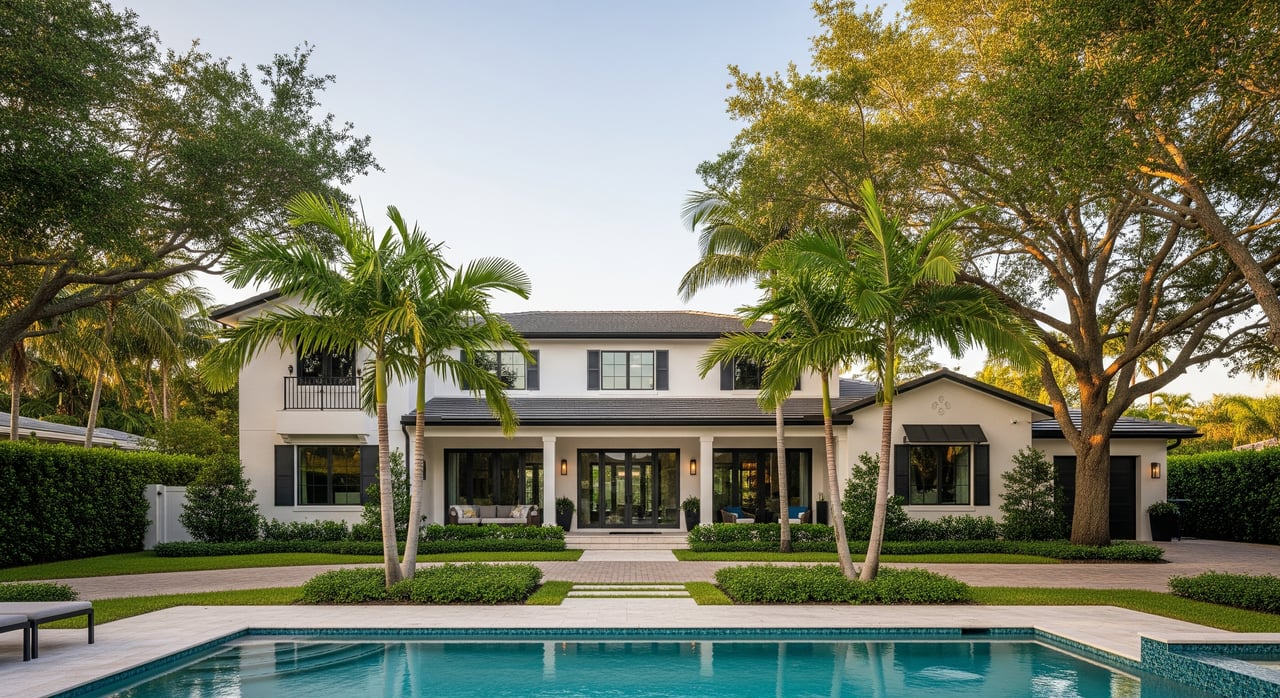
Running the numbers on a Davie single-family rental can feel confusing if you are pulling info from too many places. You want a clear, local path that shows what to collect, how to calculate returns, and what could change your outcome. In this guide, you will learn a step-by-step method to estimate rental ROI for Davie homes, plus a worked example and a quick checklist. Let’s dive in.
Why Davie rental demand
Davie sits in Broward County within the Fort Lauderdale–Pompano Beach–Deerfield Beach metro, with commuting access to Fort Lauderdale and Miami. Proximity to employment centers, hospitals, and Nova Southeastern University supports demand from professionals and students. The town’s single-family housing stock and larger lots appeal to long-term renters, with some planned and equestrian communities commanding premiums. Seasonal population flows common to South Florida can affect vacancy timing and rent seasonality, so plan for some swings across the year.
ROI metrics to know
Core definitions
- Gross Annual Rent: monthly market rent multiplied by 12.
- Effective Gross Income: gross rent minus vacancy and collection loss, plus any other income.
- Net Operating Income: effective income minus operating expenses, excluding mortgage payments.
- Cap Rate: NOI divided by purchase price. This is leverage neutral.
- Cash-on-Cash Return: annual pre-tax cash flow divided by total cash invested.
- Gross Rent Multiplier: purchase price divided by gross annual rent.
- DSCR: NOI divided by annual debt service. Higher is safer for lenders.
Step-by-step ROI math for Davie
Establish realistic rent. Pull 3 to 5 nearby single-family rental comps that match beds, baths, condition, and amenities. Adjust for a pool, garage, recent renovations, or lot size. Consider guidance from local property managers.
Compute gross annual rent. Multiply your monthly rent estimate by 12.
Set a vacancy and credit-loss allowance. A 5 to 10 percent allowance is a common range; align with recent Broward conditions and your property manager’s guidance.
Gather operating costs. Pull the current tax bill or estimate from the Broward County Property Appraiser. Get insurance and wind coverage quotes from your insurer and check updates from the Florida Office of Insurance Regulation. If a lender will require flood insurance, confirm the flood zone at the FEMA Flood Map Service Center. Note any HOA fees, lawn care, pest control, and management.
Calculate NOI. Effective income minus all operating expenses, before mortgage payments.
Calculate cap rate. Divide NOI by purchase price to compare properties on an apples-to-apples basis.
Model financing. Get an investor-rate quote and terms. For rate context, see the Freddie Mac Primary Mortgage Market Survey, then confirm with your lender.
Estimate annual cash flow. Subtract annual debt service from NOI.
Calculate cash-on-cash return. Divide pre-tax cash flow by your total initial cash invested, including down payment, closing costs, and initial repairs.
Test sensitivities. Re-run the numbers with plus or minus 5 to 10 percent rent, different interest rates, and higher or lower expenses.
Hypothetical pro forma example
The figures below are illustrative and not a quote.
- Purchase price: $600,000
- Monthly market rent: $3,200
- Gross annual rent: $38,400
- Vacancy allowance: 6 percent, effective rent: $36,096
- Operating expenses: 35 percent of effective income, about $12,634
- NOI: about $23,462
- Cap rate: about 3.91 percent
- Financing: 25 percent down ($150,000), loan $450,000 at 6.25 percent for 30 years, annual debt service about $32,800
- Pre-tax cash flow: NOI minus debt service, about −$9,338
- Cash-on-cash return: about −5.8 percent (includes an estimated $10,000 for closing and initial repairs)
What it means: The surface cap rate can look reasonable, but leverage, property taxes, insurance, and management can turn cash flow negative. Cap rate helps you compare assets. Cash-on-cash reflects your near-term pocket returns with a loan. In Davie, the outcome you want often comes from precise rent comps, accurate taxes and insurance, and the right financing.
Broward operating costs to budget
Property taxes
Use the current bill or estimator from the Broward County Property Appraiser. Understand assessed value versus market value. Investor properties do not qualify for homestead exemptions, so do not understate this line.
Insurance
Florida premiums are generally higher due to hurricane risk. Obtain multiple quotes and review windstorm deductibles and coverage. For market updates and context, check the Florida Office of Insurance Regulation.
Flood insurance
Confirm the address in the FEMA Flood Map Service Center. If the home is in a Special Flood Hazard Area, most lenders will require flood coverage, either through NFIP or a private carrier.
Maintenance and CapEx
Budget for routine items and larger replacements like roof or HVAC. A simple approach is to set aside a percent of rent or a fixed annual reserve, adjusting for the home’s age and condition.
Property management
Professional management for single-family homes in South Florida often charges a monthly percentage of collected rent and a separate leasing fee. The decision to self-manage or hire pros has a meaningful impact on net yield.
Utilities, landscape, and HOA
Clarify who pays for water, trash, lawn care, and pest control in your lease. If the home sits in an HOA, include monthly or quarterly dues in operating expenses.
Vacancy and turnover
Account for marketing, cleaning, painting, and minor touch-ups during turnover. This is separate from your vacancy allowance in the income line.
Financing, taxes, and rules
Financing for investors
Investor loans often require larger down payments and may carry higher rates than owner-occupant loans. Compare bank portfolio loans, DSCR products, and conventional options. Start with market context from the Freddie Mac PMMS and then obtain a written quote.
Taxes and depreciation
Residential rentals are depreciated over 27.5 years under IRS rules. Florida has no state income tax, which can simplify your projections. For planning on depreciation, passive losses, and 1031 exchanges, work with a CPA.
Landlord-tenant law
Lease rules, notice timelines, and eviction procedures are set by Florida Statutes. Review the relevant sections in Florida Statutes Chapter 83 and consult local counsel as needed.
Short-term rental rules
Do not assume a long-term rental can convert to a short-term rental. Review the Town of Davie’s requirements in the Davie municipal code and any Broward County licensing or business tax requirements before changing strategies.
Stress test your returns
- Base case: current rent comps, your best insurance and tax estimates, and today’s investor mortgage rates.
- Conservative case: decrease rent by 10 percent and increase expenses by 10 percent. Test a higher interest rate.
- Optimistic case: increase rent by 5 to 10 percent with stable expenses. Keep vacancy realistic.
- Leverage vs no leverage: compare cap rate to cash-on-cash. A property with a modest cap rate can still work unlevered or with a larger down payment.
Quick Davie data checklist
- Gather 3 to 5 recent sale comps and 3 to 5 rental comps for similar Davie single-family homes.
- Pull the assessed value and current bill from the Broward County Property Appraiser.
- Get property insurance and flood insurance quotes. Confirm flood zone at the FEMA Flood Map Service Center.
- Request an investor-rate quote and terms from a lender, referencing market context from the Freddie Mac PMMS.
- Ask 1 to 2 local property managers for typical fees, maintenance expectations, vacancy assumptions, and CapEx reserves.
- Review landlord-tenant rules in Florida Statutes Chapter 83 and confirm any Davie licensing or STR restrictions in the municipal code.
- Use a spreadsheet that calculates NOI, cap rate, cash-on-cash, DSCR, and sensitivity scenarios.
Make Davie ROI work
With Davie rentals, precision beats averages. Anchor your analysis to the actual tax bill, current insurance quotes, and today’s investor rates. Then pressure-test the plan with different rent and expense scenarios so you can buy with confidence. If you want local rent comps, a pulled tax bill, insurance quote referrals, and a clean spreadsheet to run your numbers, reach out to The Sklar Team. We are here to help you make a clear, data-driven decision.
FAQs
What is the difference between cap rate and cash-on-cash return in Davie?
- Cap rate uses NOI and purchase price to compare properties without financing, while cash-on-cash shows your actual annual cash flow divided by your initial cash invested once a loan is included.
How do I find reliable rent comps for Davie single-family homes?
- Pull 3 to 5 nearby leases that match beds, baths, condition, and amenities, and validate with a local property manager familiar with Davie neighborhoods.
How should I budget insurance and flood coverage in Broward?
- Obtain multiple quotes for wind and hazard insurance and check flood zone status at the FEMA Flood Map Service Center before deciding on the property.
What vacancy rate should I use for a Davie rental?
- Many investors model 5 to 10 percent, then adjust based on current Broward market conditions and the advice of a local property manager.
How do Broward property taxes work for investors?
- Start with the current bill from the Broward County Property Appraiser, understand assessed value versus market value, and remember that investor properties do not receive homestead exemptions.
Are short-term rentals allowed in Davie?
- Rules vary by zoning and building type, so check the Davie municipal code and confirm licensing or registration requirements before changing strategies.
How sensitive is cash flow to interest rate changes?
- Even a small rate increase can raise annual debt service and shift cash flow from positive to negative, so run scenarios at higher and lower rates using current context from the Freddie Mac PMMS.